
A Year Of Brotherhood
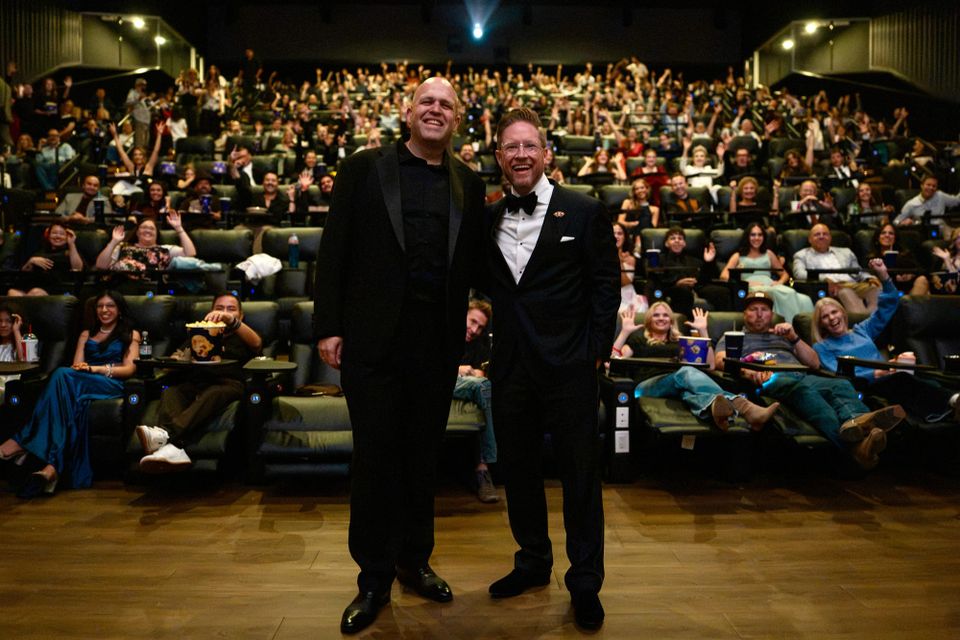
It's October 30, 2026. One year ago tomorrow, the first money for Brotherhood: A Cinematic Musical landed in our bank account. We greenlit the movie on November 1, so I'm writing this a year out from that moment.
Our movie is in 11 theaters this weekend, and I'm sitting here before the numbers have come in. I'm excited, I'm tired, and I'm so, so grateful.
This post is a bit of a reflection, along with a few new rules I have for myself and my movies going forward, from the lessons of the last year. They're all important, so I want to go through them one by one.
1. You can't create from fear.
This movie started from a place of love, and if fear had ever taken over we never would have made it. The fear of what would people think, how would it be received, what might happen if we expose our values in such a public way? Any of those questions would have stalled and maybe even killed the project before it got off the ground.
Everything along the way has been a question of whether you're going to operate from fear or from faith. Fear can look like a lot of things: procrastination, uncertainty, doubt. Those are all flavors of fear. Faith looks like action: making the call, doing the thing, moving forward even when you're uncertain.
2. The audience has to be there before anything else.
For me, if the demand isn't there, it's not responsible to raise money and spend that money on something nobody wants.
It's not hard to see if people want the thing you want to make. It's scary for sure, but it's not hard. You ask people if they want to experience it and you give them an opportunity to do so. They either come or they don't come. They either raise their hands to help or they say, "That was fun," and they go home.
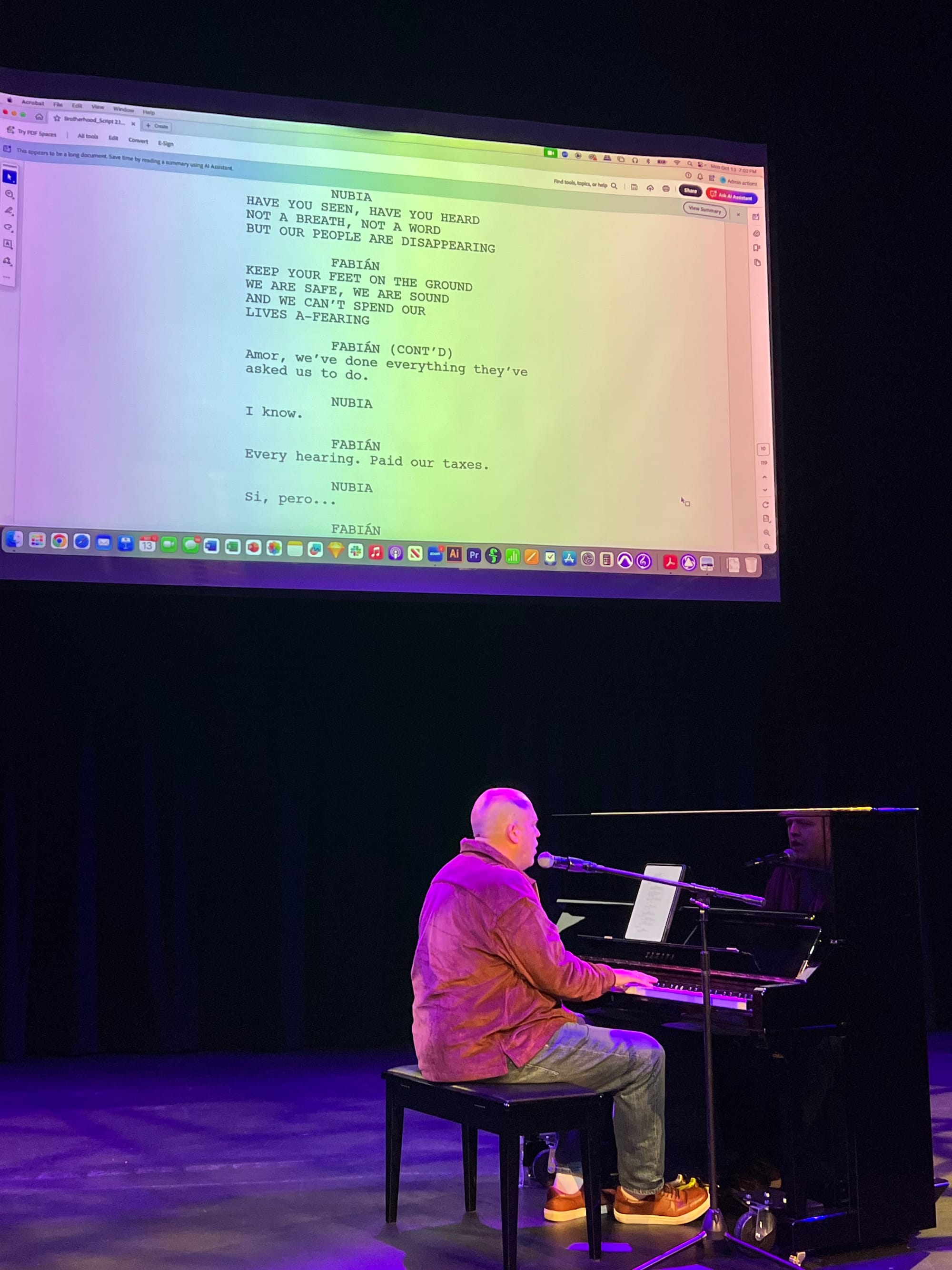
Before the movie went into production, from September 2025 through April 2026, we previewed the movie in script form 10 times in three cities: Los Angeles, Salt Lake City, and New York. Every time, people enrolled themselves. They raised their hand and said, "How can I help?" That's where our collaborators came from. It's where our investors came from. It's how this film came to be. If we had never done that, it wouldn't be in theaters today.
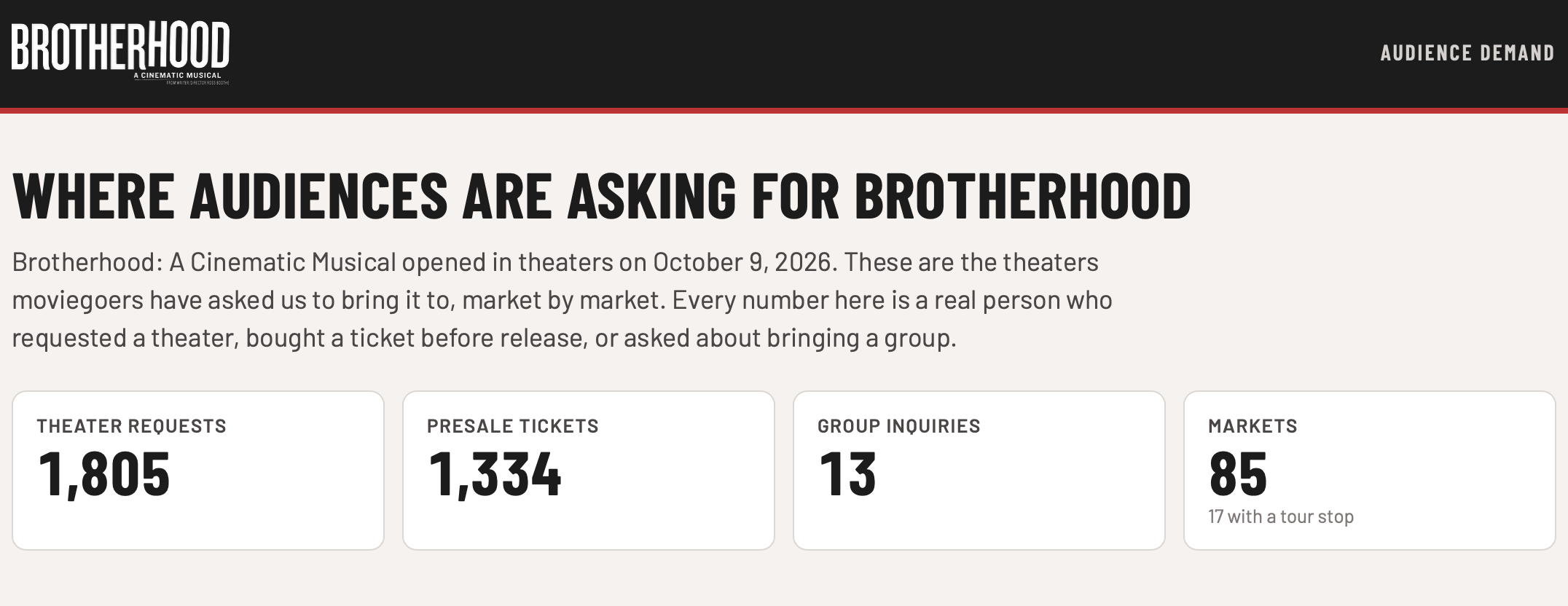
We kept doing it all the way to release. As of last night, 851 people have sent us 1,777 requests to bring the movie to a theater near them, across 85 markets. More than 800 tickets were pre-ordered before there was a theater to use them in. When I called a theater, I could tell them how many people in their town had already asked for it.
The audience is a term people use often. By audience I don't mean "people you can reach". I mean people who have expressed demand for the thing you want to make.
If you don't have demand first, you're hoping it shows up later. It's much better, and honestly cheaper, to prove the demand first and then use it to get the things you need: money from investors, actors and collaborators, distribution, and marketing.
One thing I learned from my last two movies in theaters is that supply first doesn't work. Those films went into more theaters than we had demand for, so our per-screen average was low and we didn't stay in theaters very long. Many theaters dropped us after one week, so there was no chance for word of mouth to spread and for the movie to expand.
With Brotherhood, we're doing it differently. The plan was always to start small, in 25 cities, and expand based on demand as far as we can. It's taken three weeks longer than we wanted, and we have about half the theaters I was hoping for, but it's the same plan and there's still room to expand next week and through November. If that means just a handful more theaters, great. If it means hundreds more theaters, also great! Either way, we'll follow the demand, and we won't oversupply the marketplace and hope people show up.
3. The job you keep avoiding because of fear is the one you should be doing.
On this movie there were times I sought out people to help with fundraising, theatrical booking, and distribution. More than once, when we shifted to doing it ourselves, things moved forward. That's not a principle for everyone on every movie, but it was true on this one. Something about this project needed to stretch me as a producer and us as a team, to prove to ourselves what we're capable of.
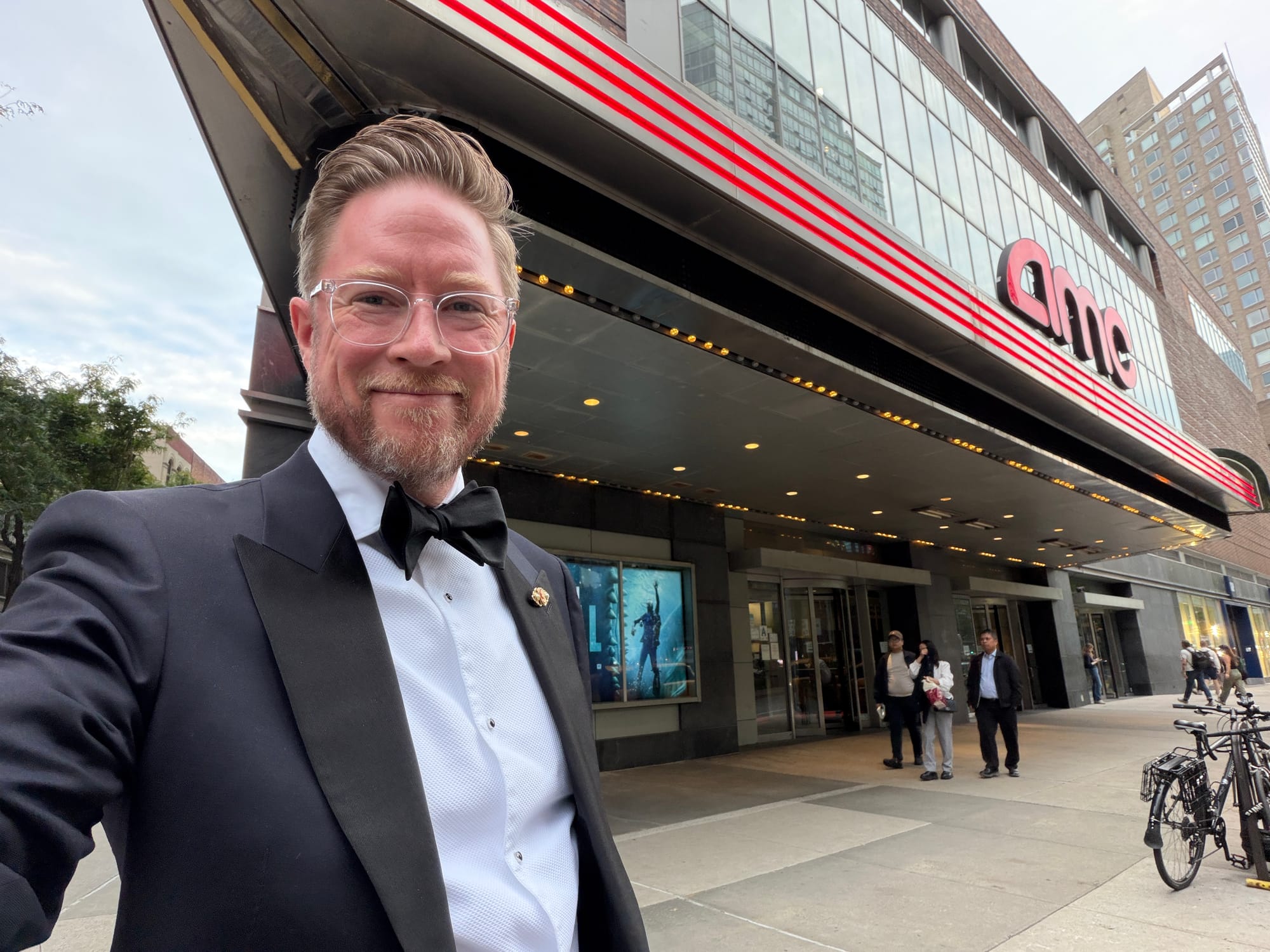
We had set a date of October 9 to release this movie, after pushing it a week because October 2 was so packed. On October 9, we were in one theater with one showtime. Needless to say, that was disappointing. A few days later, I made a change. Rather than trying to get someone new up to speed, I decided to take over theatrical booking.
Over the next two weeks I booked 11 theaters for week-long runs in 11 different cities and 5 different states, by making the calls myself, clearing my calendar, and forging new relationships. I can't say yet whether it worked, but I can point to this: we have 11 theaters when before we had 1.
Without turning this into a therapy session, I have resistance to making phone calls. If I'm not in the right headspace, I don't feel like making them. Yet the calls are what have moved this project forward the whole time: calls to investors, calls to collaborators, calls to distributors now. Wherever the resistance pops up the most is likely where you'll find the most progress.
So wherever you're feeling the fear, or feeling like you need someone to do this for you, the first thing to ask is: is that true, or are you just avoiding the scary, hard thing?
The second thing: there are plenty of times you should hire someone. I didn't write, direct, shoot, act in, or edit this movie. We had faith in the people we hired to do those jobs and they did exceptional work.
4. Focus on what you can control.
There are many things in your control and a lot of things out of it. You can't control how many independent theaters give you a run. You can't control who says yes or no.
You can control picking up the phone and how many people you talk to every day. You can control how many times you follow up. You can control whether you follow up by email or by phone. I found the phone much more effective, at least to get the initial deal in place, and fewer people responded to me from a first email than from a call.
One theater in the Los Angeles area didn't answer two emails. I left one voicemail on a Friday morning, and they said yes that afternoon.
5. Every plan will break, so plan for it.
Every plan we made on this movie broke at some point:
- who we wanted to act in the movie
- when we wanted to shoot it
- how much it was going to cost
- how much money we had in the bank
- who was going to distribute it
- when it was going to be released
- how many people were going to show up and raise their hand
And yet the movie is here in theaters today, finished, and it punches above its weight in every way possible, from the performances to the cinematography to the music to the impact it has on the audience who sees it.
The reason is that we never stopped. We never let fear or uncertainty or doubt decide for us how we were going to show up. We chose to show up with faith every day and we willed this project into existence.
I can attribute most of my success in this industry to the fact that I will keep going until it works, whatever it is.
So prepare yourself for every plan you make to break in some way, because it will. You will have to change your mind. You will have to change your approach. You will have to change your dates and your budget and who you're working with. But if you never give up faith, you will get there.
Producers: Don't give up.
Your job is to lead with relentless optimism and faith, and with so much confidence in the work that the people around you believe it too. That is the job.
The day-to-day matters too: making calls, raising money, hiring people, firing people, partnering. But the main thing is to maintain and strengthen your mindset as an individual and as a leader so that your business and your movie can thrive. As soon as your psychology starts lacking, everything is at risk of falling apart.
The state of the industry
Look, I'll be the first to tell you that the system isn't working for a lot of the people who are working in it. But my decision two years ago, and every day since, has been to fix it: to forge a new path, to not take no for an answer, to not wait for permission, to be truly independent and figure it out. That's what I've done: raise money, start a new business, make this movie, figure out distribution, and everything else.
It - the system - isn't working today, but that doesn't mean it can't work. It just means we can't keep doing it the way we've always done it. I have ideas and even plans on how to fix distribution for independent filmmakers, along with financing and marketing and production and every other part of the process, so it works for the people who work in this industry.
If the way things are feels like enough of a reason not to try, I understand. I've felt that pull too. This work will show you a lot of ways it won't work, and what carries you through them is what you believe. If you're willing to figure it out as you go, to do more of what works and less of what doesn't, to make the calls, to try again and again and again, to keep going until it works, then you've got a chance.
If you're afraid right now...
You cannot create from a place of fear. You cannot build from a place of fear, because the fear shows up - It shows up in your eyes, in your voice, in your language, in your body, in your actions, in the way you hold yourself, in the way you treat others, in the way you talk about the movie.
You can't let fear run your day, because as soon as you do, progress stops.
And if part of why you're doing this is to prove something about yourself, that's worth looking at.
The only way forward is with faith.
We had our final preview of the movie on Wednesday, for National Immigrants Day. We wanted to invite local leaders and members of the community to experience this movie with us one more time before it hit theaters this weekend. We filled a room and showed the movie.
More than any other time, I watched people step out of the theater crying. More than one person came up to me and said, "I need to hug you." They were so overcome with emotion that they wanted to reach out to someone they had never met before, hug them, and thank them.
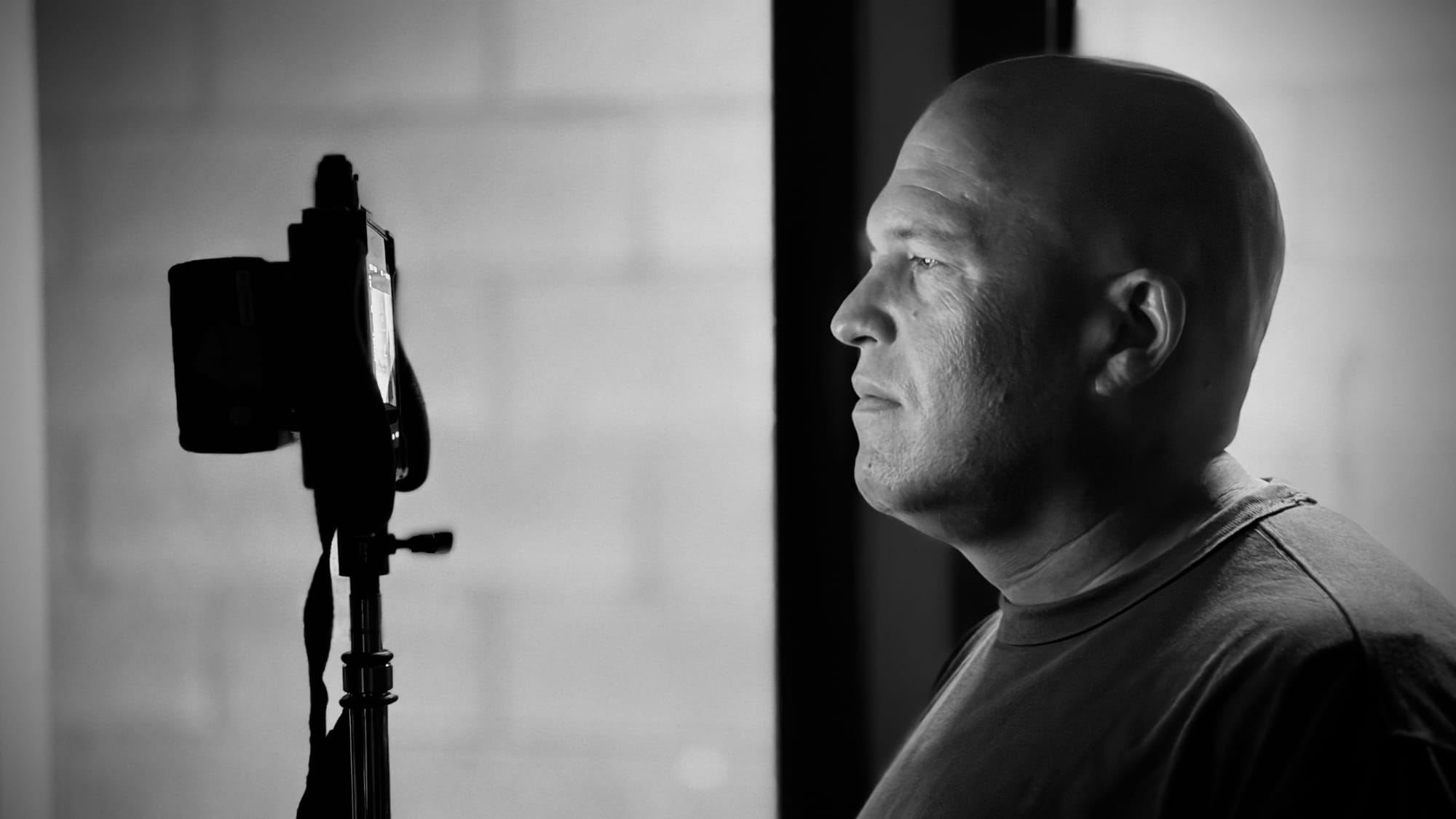
I owe a special thank you to my friend and brother, Ross, for trusting me with this movie and for being such a force for good. For teaching me what depths one can go out of love for others, and for this beautiful, impactful story.
Underneath all of this last year, love has been the driving force. It has been the source of our capacity to show up and do the work each day. The love we have for each other, for the people, and for this movement. This movie is for the people who worked on it and the people who will see it. Love is the core of the message and the way it was made.
When you see this movie, you will understand what that looks like.
Member discussion