
The Best Time to Build an Indie Film Company Is Right Now
Last year I was at Universal Studios with my wife, three boys, and my nephews, riding the backlot tour. Their eyes lit up at every street.
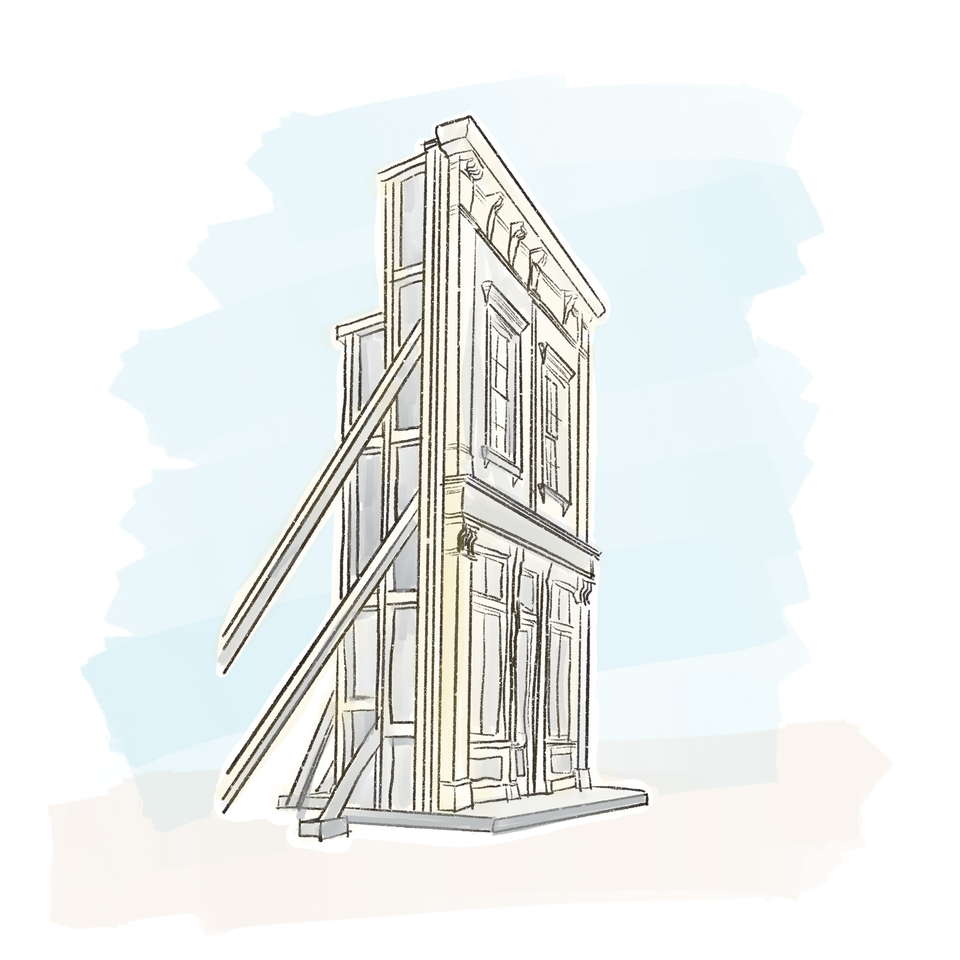
I saw something else. Facades that were one wall thick, built once, filmed on for forty years by productions that were only connected because they happened to film on that same lot.
The films and their crews came and went. The lot stayed.
But lots change hands too.
In 2021, ViacomCBS sold CBS Studio Center in Studio City for $1.85 billion, filmable backlot and all, to a real estate firm called Hackman Capital. Hackman defaulted on $1.1 billion in debt and handed the keys to its lenders. Netflix is now under contract to buy it for $400 million.
Same 55 acres, down about 78 percent in five years.
The lot only changes hands when the industry starts to collapse.
The industry doesn't open. It breaks.
That's your way in.
The common belief is that you build a company when conditions are good. You wait for finance to have an appetite for your industry, for the market conditions to take a turn for the better, for someone else to validate the industry projections are “up and to the right”.
The alternative – building during a collapse – seems reckless. You worry that everyone around you will say so, whether to your face or behind your back.
History says the opposite. Good times are exactly when you cannot get in. When the incumbents are healthy and growing, they own the distribution, the money, and the relationships with talent; and they control the gates that keep you out.
Nothing is broken, so there's no opening.
When the industry collapses, the gates fall, and the gatekeepers have nothing to gatekeep. Netflix became one of the biggest film studios, and now it's buying the backlot. The cycle repeats itself – the interregnum between the old gatekeepers losing power and the new ones consolidating it is the only window an outsider can build in. It's measured in years, and we're inside it right now.
If you wait for the next equilibrium in the industry, you end up being a tenant, at best, in a lot someone else built. Whoever builds infrastructure during the interregnum owns it, and they decide the price of rent. You end up with a worse deal than you had before, with less leverage, and a new landlord.
The reason we avoid building during scary times is that it feels risky. We're spending money when money is scarce, putting our reputation on the line, and if it doesn't work out, everyone who called it reckless will be proven right.
During the years between COVID and the dual strikes in 2023, I desperately wanted to be a full-time feature film producer. I had done four seasons of a TV show between 2018 and 2020, and before that had a little boutique, two-person video production company with a friend.
When my first opportunity to produce came along I jumped at it. But I saw the lack of leverage – scraping together financing, no distribution plan, hoping for a good outcome so we could make another movie after this one.
After three other projects between 2022 and 2023, I saw the cracks opening in the industry, and my chance. I didn't want to sneak onto someone else's lot, I wanted to build something more durable, more impactful, with more leverage.
I started with the financing piece. I saw, over four films, how risky indie film actually is to an investor. I started learning what they wanted out of that investment, how they made decisions like donating $150,000 versus investing $1 million. And I started connecting how all of the other parts of that infrastructure – development, production, marketing, and distribution – led to the outcomes they were investing in.
At the end of every production, the crew would come up to me and ask, "When's the next one?" I hated that I didn't have an answer.
A single film investment wasn't strong enough to support what I wanted to build. It wasn't serving the investors either as it was – and still is – the riskiest bet in indie film.
Rather than building a traditional financing foundation that had to be built anew for each new production, I wanted something long-lasting. I looked into another industry – venture capital – as they seemed to have the “money thing” figured out. People I knew were raising hundreds of millions of dollars for their next fund, because they'd built trust and gotten results for investors over a long enough period of time.
It was clear we needed a different architecture, so instead of raising money for a single film, I started raising money for a film fund. That would make each additional film after the first easier to finance, with the money deployed across a slate rather than one SPV at a time.
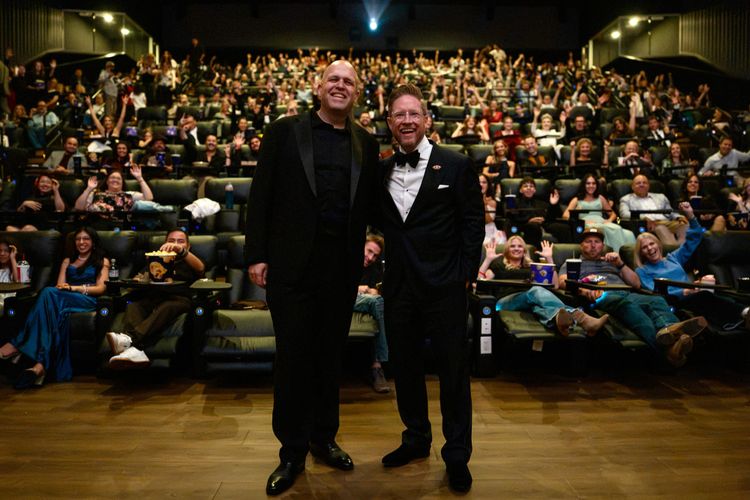
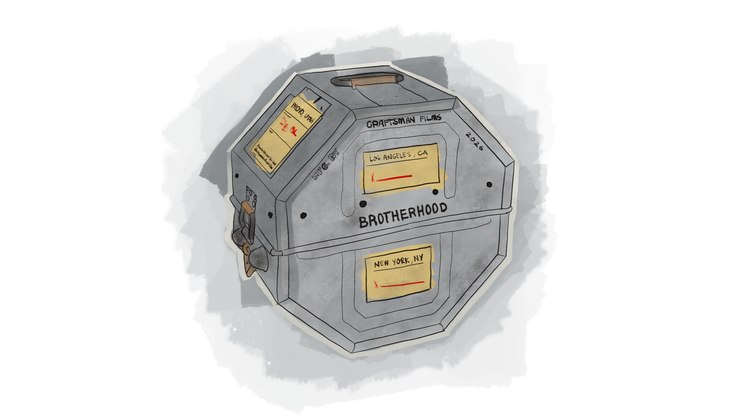
That was November of 2024. I did my first public pitch to a room of about thirty people in the living room of a friend's house in Salt Lake City. No one in that room was an institutional film investor, but months later we had our first investor into the fund, then a few months later, another. Once Brotherhood: A Cinematic Musical was decided on as our first project through the fund, the investments accelerated. We're now a ten days from that film hitting theaters on October 9th, and we're lining up the next three projects for next year as we close Producer Fund I at the end of the month.
Nearly two years of building the financial infrastructure for Craftsman Films.
I wish I could sit here and write that "It worked!", but I'm writing to tell you that I'm in the middle of it. Will Brotherhood work? Will the fund grow to finance more films? Will a new independent film studio be built on this new foundation we've laid?
I've spent two years on a bet that it's the best time ever to build something new. But there is never any proof that it's the right decision until after it works. You can't know the outcome before it arrives.
So here's what is true right now, and why I'm encouraging all of us to build:
The cost of making a film keeps falling. It started with cameras, then post moved onto machines most of us already own. Distribution fell separately, and it fell the furthest.
Permission is shifting into the hands of the creators. You can "greenlight yourself", self-fund, produce, post, and build the audience before the film is ever finished. 2026 is the year audience-first films stopped being rare. Iron Lung, Obsession, and Backrooms all started with creators who had the audience first. The audience was the greenlight, regardless of who ended up distributing.
The contraction of the industry in LA and in the US has released extraordinary talent both in front of and behind the camera who are now independent. Labor is more available than it has been in a generation.
The audiences are directly reachable, and even ownable. We have thousands of people on a Brotherhood email list that didn't exist a year ago who are now supporting our film in various ways, from reposting our Instagram reels, to attending our promotional tour stops, to investing hundreds of thousands of dollars into funding the film.
We're building more than a slate. A slate is not a company, it's a package of multiple films sold together to investors and distributors. A company extends beyond that, builds relationships with everyone in the industry – the investors, the filmmakers, the production companies, the distribution, and the audience. A company compounds. A slate starts from zero with the next one.
The one-off structure came naturally to us. The crew leaves and goes to the next project, and the next, and the next. They start every project from zero. So when they decide to write, or direct, or produce their own feature, that's what they know. Some are able to find a team they can work with over and over again, but the financing and distribution and the audience are still a cold-start problem.
The studio system was built to solve this. Same actors, same directors, same financing entity, owned the distribution and even the theaters. For about 30 years, that was the industry. When it ended, filmmakers learned to build facades and strike them when they were done.
Even the awards reinforced the dichotomy – awards and coverage are given to the film, never to the infrastructure. Nobody wins an award for building a functioning company, so the talent seeks out the next potential contender rather than the stable and steady infrastructure.
The shift over the last few decades is that even the studios stopped believing in owning the ground. CBS sold Television City in 2018 for $750 million, to the same buyer that later lost the Studio City lot.
The studio sold the ground. The landlord who bought it got wiped out. The new gatekeeper is buying the lot cheap while the rest of us argue about what streaming did to the business. The landlord you're waiting for already came and went. Fewer lots, fewer doors.
Most film careers are made up of a series of one-offs, and at the end you have a filmography on IMDb. That's not nothing, mind you. That's an entire career worth of craft that is tangible and impactful. Dozens, sometimes hundreds, of stories that your talent touched.
But it's not something someone else can build on.
A film employs crew for eight weeks. A company might employ them for a decade. The difference between building a single project and building a company that can answer "When's the next one?" is the difference between giving someone a job and giving them a livelihood.
“Building now” still looks reckless. That's exactly why it’s the right time.
The studios sold the backlots because the ground was worth more than the films that shot on them. The ground is still there. It's cheap now, and somebody is going to own it.
Score your own film business against the five-part framework I use at craftsmanfilms.co/scorecard.
Member discussion